
What are Load Pins?
Posted by Taylor M. on Sep 18th 2026
A load pin is a type of load cell designed to measure tension and compression forces in a variety of industrial weighing and material handling applications. They are ideal for specialty weighing systems and custom equipment. Load pins often replace components like bolts or clevis pins and are almost always permanently installed to consistently monitor vertical or horizontal tension.
Load Pin Construction
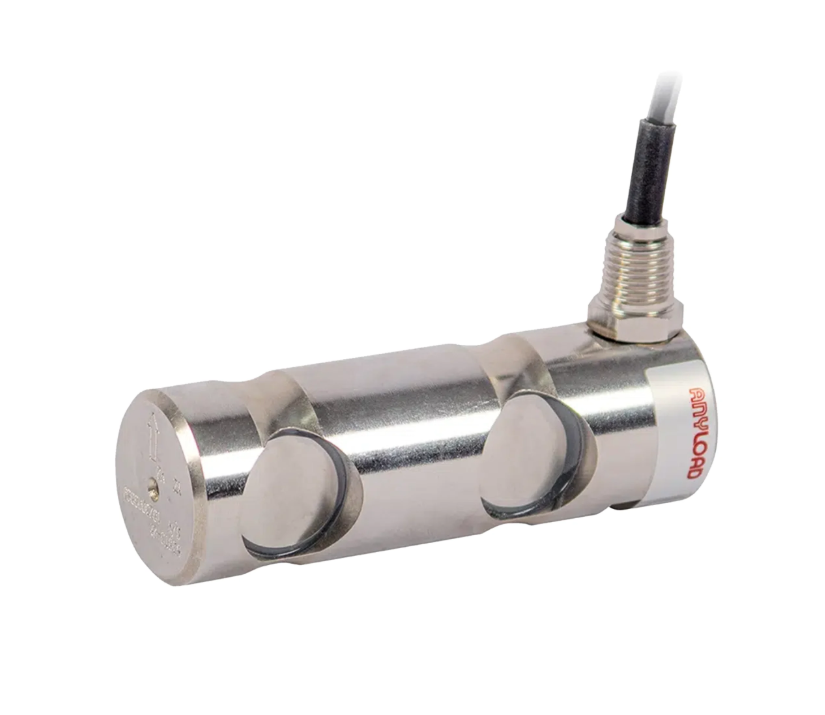
Load pins consist of a cylindrical pin that connects two components. Strain gauges are embedded in the center to convert the tensile and compression forces on the sensor. They are typically made from high-strength stainless steel and can also be waterproof for use in harsh environments.
How Load Pins Work
The exterior of a load pin has two grooves to separate the applied forces. These grooves are very important because they also prevent any binding on the pin. When the load is applied, the force acts on the middle of the pin, while the fixed support applies pressure in the opposite direction. This is the force, or tension, the strain gauges use to convert into an electrical signal. That signal is then passed on and converted into what we see as the weight reading on a display.
RELATED ARTICLE: The Ultimate Load Cell Guide
Common Uses
Load pins are especially well suited for overhead weighing and material handling systems. As a safety device, they can be used for load monitoring to help prevent equipment failure due to overloading that can lead to injuries or costly damage.
They are most commonly used in:
- Bridge, jib, gantry and straddle cranes
- Winches
- Elevators
- Lifting and rigging equipment
- Shackles
- Bearing blocks
- Pivots