How Modern Scales Improve Warehouse Operations
Mar 26th 2026
In today’s supply chain environments, efficiency, accuracy, and data are more important than ever. Warehouse operations have evolved into complex, data-intensive processes where every movement, measurement, and transaction can significantly impact costs, customer satisfaction, and overall performance. Among the many technologies that contribute to the smooth operation of a warehouse, digital scales play a vital yet sometimes underappreciated role.
Accurate Weighing Reduces Freight Costs
One of the primary benefits of using modern digital scales is the accurate measurement of raw materials, products and freight shipments. These directly influence your shipping costs, load planning, and inventory accuracy. Shipping rates are calculated based upon dimensional weight. Incorrect weights can lead to loss of profits, regulatory compliance issues, and customer disputes.
For example, if you underestimate the weight of a pallet, this can result in freight reclassification, added carrier fees, and delays for your customer. On the flipside, overestimating can unnecessarily inflate shipping costs or under-utilize space in trucks, leading to inefficiencies in logistics planning.
Inventory Management Becomes More Efficient
Physical Inventory Counting
Digital scales are capable of performing additional functions beyond basic weighing. They speed up manual processes and enhance data management with advanced weighing modes and communication interfaces.
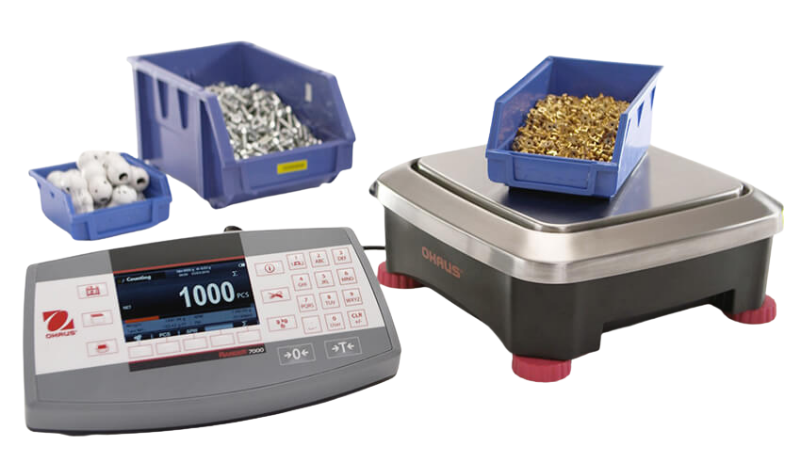
For example, counting scales make the process of counting a large quantity of small parts faster and more accurate. Checkweighing scales can quickly verify if a bin, box or container has an accurate amount of an item based on a quick weight check. Pallet scales can quickly verify if a pallet has the correct number of packages on it.
Make Supply Decisions Based on Data
The importance of accurate weight data goes beyond just shipping. In data-driven warehouses, every weight measurement is part of a larger set of operational metrics. Integrated warehouse management systems (WMS) rely on weight data to maintain accurate inventory records, forecast demand, plan storage space, and monitor your product movement. When warehouse scales are directly connected to the WMS, the system instantly updates your inventory levels based on weight readings. This real-time data integration enhances inventory visibility, supports just-in-time inventory practices, and allows for better decision-making throughout the supply chain.
Moreover, accurate weight data can assist in detecting discrepancies in orders or deliveries. For instance, if a pallet is recorded to contain ten boxes, each weighing 20 kilograms, the expected total weight would be 200 kilograms. If the pallet scale shows a significantly different value, it could indicate an error in picking, a missing item, or even a quality control issue. Identifying such inconsistencies early helps prevent larger problems down the line, such as customer complaints, returns, or inventory imbalances.
Assist in Safety & Regulatory Compliance
Warehouse scales also support compliance with safety and legal standards. Many state and local agencies impose weight limits on transport vehicles to prevent overloading, as this can lead to safety hazards or excessive damage to roadways. This is where heavy-capacity floor scales and vehicle scales are particularly useful, providing precise weights that can be used for load planning and compliance. Tickets and fines across fleets of trucks can become very costly!
Common Scales Used in Warehouses
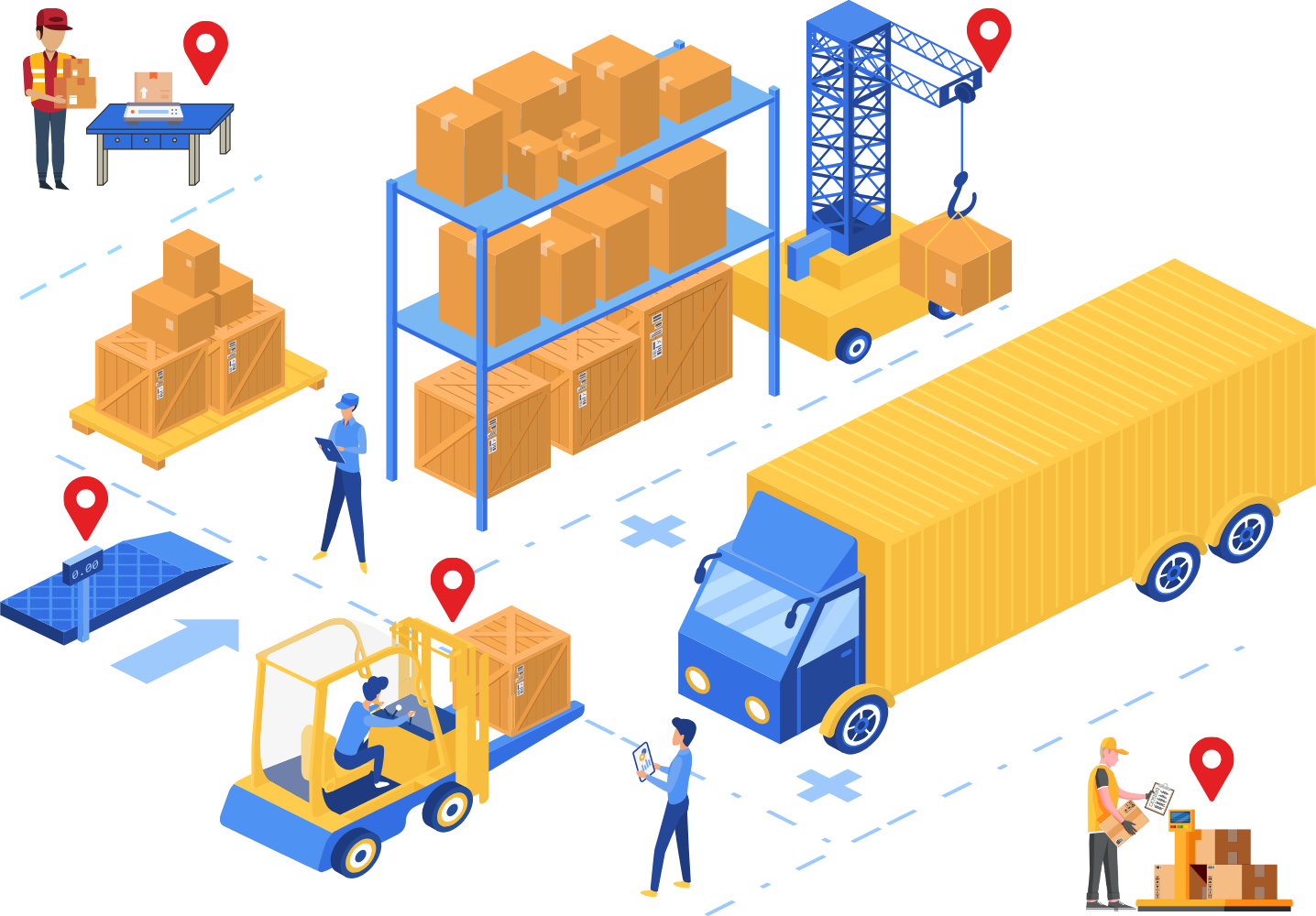
Digital scales are used throughout warehouses to weigh materials, goods, and pallets at multiple stages. They come in different types and sizes, each tailored to specific tasks within the warehouse. You will find floor scales and pallet scales used for weighing bulk goods and freight, and benchtop shipping scales at shipping stations. Regardless of their location or need, digital scales ensure that measurements are precise and that data is correctly recorded and utilized.
Floor Scales
Floor scales are among the most commonly used instruments for weighing in warehouses. These platforms are typically installed in high-traffic areas where large, heavy goods are regularly weighed. Their durability and size make them ideal for handling full pallets and bulky items. Floor scales are often integrated with digital displays and data systems, allowing your warehouse staff to quickly and accurately capture weight information and feed it directly into their WMS. This real-time integration improves workflow by minimizing manual entry, reducing the risk of errors, and increasing overall operational speed.
Pallet Scales
Pallet scales, also referred to as pallet jack scales, represent a more mobile and flexible solution. They combine the functionality of a traditional pallet jack with a built-in scale. You can complete the process of picking up, transporting, and weighing goods in a single, seamless action. You’re able to weigh loads without needing to stop at a fixed weighing station! The added mobility significantly streamlines operations, particularly in high-volume environments where speed is crucial. They not only save you time but also reduce labor costs and improve efficiency by eliminating unnecessary steps in the material handling process.
In-motion Checkweighers
In-motion checkweighers are used to keep product flow moving quickly while making sure every package meets the right weight requirements. As items move along a conveyor, the system automatically weighs them without slowing down the process. This helps verify order accuracy, prevents under or over shipping, and ensures compliance with shipping regulations. By catching errors early, checkweighers reduce costly mistakes and help maintain efficiency across busy distribution centers where speed and accuracy are both critical.
More advanced models go beyond simple weight verification by collecting detailed data from every package that passes through. These systems connect directly to warehouse management software, allowing you to track trends, monitor productivity, and ensure real-time visibility of inventory and shipping operations. By linking weight information with order data, your warehouses can quickly identify problems, improve quality control, and keep performance in line with customer expectations. This integration of weighing technology with data systems makes in-motion checkweighers an important tool for logistics operations that want to stay both efficient and accurate.
Benchtop Shipping Scales
Benchtop shipping scales are purpose-built for use in shipping departments and warehouses. They are used for small to medium packages, large envelopes, and other parcels that exceed the weight of traditional mail. They are generally smaller in size and designed for weighing individual packages rather than bulk goods or pallets. Modern scales are frequently connected to shipping software platforms, allowing them to automatically transfer weight data to generate accurate shipping labels and documents.
A good example of this is the OHAUS Courier 5000 shipping scales. They include HID communication, which allows them to connect directly to software like UPS Worldship and more. This automation is key to reducing errors and speeding up your packing and dispatching process.
The Future of IoT and Connectivity
The role of warehouse scales in modern operations is evolving alongside advancements in digital technology. Today’s smart scales are increasingly equipped with wireless connectivity, cloud-based data integration, and Internet of Things (IoT) capabilities. These innovations enable scales to communicate with other systems in real-time, offering enhanced visibility, analytics, and traceability.
For example, an advanced weighing system can automatically log each weighing event with a timestamp, operator ID, and SKU data, creating a detailed audit trail. This level of data detail supports better reporting, analytics, quality and regulatory compliance.
Final Thoughts
When integrated with warehouse management systems, scales become powerful equipment that help drive efficiency, improve accuracy, reduce costs, and ensure compliance. As warehouses become increasingly digitized and interconnected, the role of scales in supporting smart, data-driven operations will only grow more significant. Investing in the right weighing systems is not just a matter of operational convenience, it is a strategic decision that helps support your entire supply chain.
 Need help outfitting your warehouse with advanced weighing systems that improve overall efficiency? We can do that! Scales Plus is a leading distributor and service provider, offering an exceptional level of support to our customers around the country. Our team of sales staff and technicians can help you find the right scales for the job, no matter what the application is.